 GL Inspections
How do gutters, downspouts, grading and a sump pump keep water out of my basement?
Keeping a basement dry is mostly about moving water away from the house before it reaches the foundation: eavestroughs that don't overflow, downspouts that discharge at least a metre or two from the walls, ground that slopes away from the house, and, where there is one, a working sump pump whose discharge is carried away from the foundation. These fixes are usually inexpensive compared with repairing a wet basement.
Updated October 2026 · By Gerardo Lucero, Certified Professional Inspector (CPI)
Follow the water: a step-by-step walk around the house
When I inspect drainage, I follow the path a rainstorm takes, from the roof edge down to the street. Many wet basements start with a problem at one of these six steps, and you can do the same walk yourself on a rainy day.
Step 1: The eavestroughs
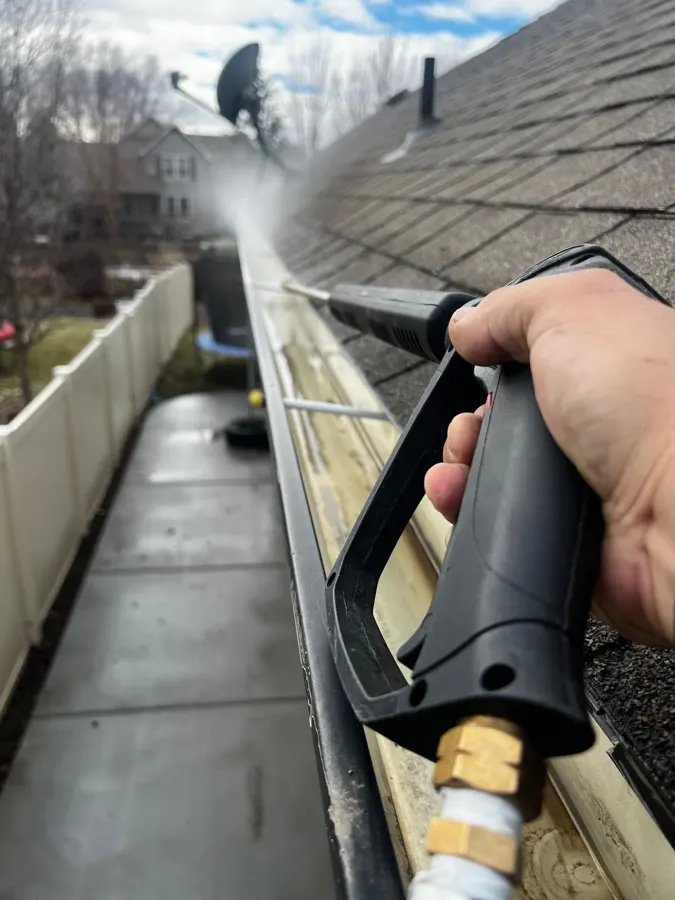
Eavestroughs (gutters) collect a surprising amount of water from even a small roof. Look for overflow marks on the siding or brick, sagging sections, leaking joints and leaves or shingle granules packed in the bottom. An eavestrough that overflows dumps water right beside the foundation, which is exactly where you don't want it. Clean them at least in spring and fall, more often under big trees.
Step 2: The downspouts
Each downspout should discharge onto a splash pad or extension that carries water at least one metre from the house, and farther is better. It shouldn't be aimed at a neighbour's property, a walkway or a driveway where it can freeze. In older Toronto neighbourhoods, many downspouts were once connected straight into the sewer; the City of Toronto now makes disconnection mandatory because it lowers the risk of basement flooding. If you see a downspout disappearing into a pipe in the ground, ask about it.
Step 3: The grading
The ground should fall away from the foundation, ideally at least 15 cm (6 inches) over the first 3 metres (10 feet). Watch for low spots, settled soil along the walls and garden beds built up higher than the ground around them. In newer subdivisions in Vaughan, Kleinburg or Maple, backfill around the foundation can settle in the first years, and side-yard swales from the lot grading plan carry water to the street. Don't fill in a swale or block it with a shed or fence.
Step 4: Hard surfaces and window wells
Driveways, patios and walkways should slope away from the house, not toward it. Window wells need a clear drain and a few centimetres of gravel, and ideally a cover. As a carpenter who has built many GTA decks, I also check that landscaping and decks haven't raised the grade up against the siding or above the brick line.
Step 5: The sump pit and pump
Many GTA homes, especially newer ones, have a sump pump that removes water collected by the foundation drains. Where the float is accessible, I check that the pump runs and that the discharge pipe goes outside and away from the foundation, not into the floor drain. Sump pumps are often expected to last around 7 years, so ask how old it is. A high-water alarm and a battery backup are worth considering.
Step 6: The backwater valve
A backwater valve stops sewage from flowing back into the basement when the municipal sewer backs up. I note whether one is visible and accessible; servicing it is a plumber's job. The City of Toronto's Basement Flooding Protection Subsidy Program currently offers up to 80% of the invoiced cost, up to $1,600 per backwater valve and $2,250 for a sump pump, for eligible homes and work.
Small fixes vs bigger projects
Cleaning eavestroughs, adding downspout extensions and building up soil so it slopes away are weekend jobs. Cracks with active leaks, a rising water table or repeated sewer backups are bigger projects for a specialist. To read the warning signs inside, see my guide on signs of water in the basement, and for cracks, when foundation cracks are a concern.
Own the home and want a drainage check before spring? A homeowner inspection covers it. Book your inspection here.
Sources
More guides
- How long does a roof last in Ontario, and how do I know it needs replacing?
- What causes attic problems like ice dams, frost and mould?
- How old is too old for a furnace, A/C or water heater, and what about rental contracts?
- What should I check at my new-home PDI with the builder?
- What's different about inspecting a townhouse or semi-detached home?
Questions people ask
how far should downspouts drain from house
At least one metre from the foundation onto a splash pad or extension, and farther is better. Don't aim them at a neighbour's yard or a walkway.
what slope should the yard have away from the house
A common guideline is at least 15 cm (6 inches) of drop over the first 3 metres (10 feet) away from the foundation.
how long does a sump pump last
Often around 7 years. Test it each spring by checking that it starts, and consider a high-water alarm and battery backup.
are downspouts allowed to go into the sewer toronto
No. The City of Toronto requires downspouts to be disconnected from the sewer system, which lowers the risk of basement flooding.
does toronto pay for a backwater valve
The City's Basement Flooding Protection Subsidy Program covers up to 80% of eligible costs, up to $1,600 per backwater valve. Check the City's site for current rules.
Contact us today
Book in minutes
Tell me what you need and I'll confirm timing and price, usually within the hour.